

Most Endangered Places 2026
Preservation Oklahoma is pleased to announce the 2026 list of Oklahoma’s Most Endangered Places. POK aims to promote the places where Oklahoma history lives by bringing awareness to historic landmarks across the state. POK seeks nominations from the public every year, and a team of historic preservation professionals meets to decide which properties to include on the list. Although inclusion on the list does not guarantee protection or funding, recognition for these structures may increase restoration efforts and possibly ensure their longevity. A variety of property types were nominated from across the state. The 2026 list includes transportation sites, historic downtown locations and final resting places.
THE 2026 LIST OF OKLAHOMA’S MOST ENDANGERED PLACES INCLUDES:
Walters Depot
1220 W. Nevada-Walters
The historic train depot in Walters is an irreplaceable landmark that tells the story of the community’s founding, growth, and connection to Oklahoma’s rail era. It once served as a vital gateway for people, goods, and agricultural commerce, shaping Walters’ economic and social life. The depot was completed in 1920 and listed on the National Register of Historic Places in 1998. It is significant for its role in transportation in Cotton County. It’s an excellent example of station architecture on the Rock Island line. It was constructed as a fireproof replacement for the previous depot that burned and contributed to Walters becoming the county seat.
Why It’s Endangered: Today, the depot faces serious threats from age, deferred maintenance, and limited local resources, putting the building at real risk of irreversible deterioration. Local preservationists hope to highlight its significance, draw attention and partners to its urgent needs, and provide a powerful tool for education, advocacy, and future preservation efforts.
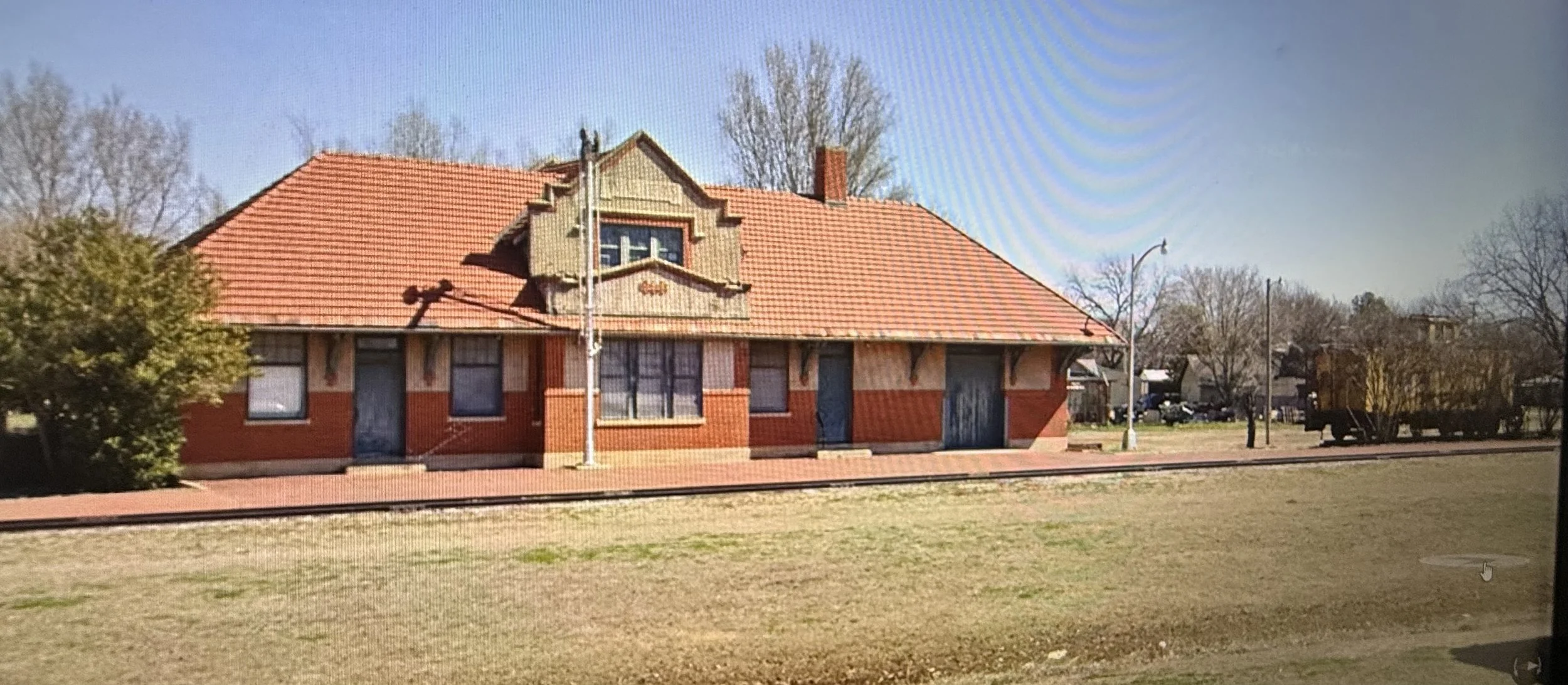
Photo submitted by Matt LaFee.
The Commerce Building
117-121 S. Grand Ave.-Okmulgee
The Commerce Building located in Okmulgee’s historic core, stands as a striking architectural landmark. Built in 1921 at 117–121 South Grand, this Beaux Arts structure was erected during Okmulgee’s early 20th-century oil boom and remains the tallest and most grandiose commercial building from that era. It features an ornate terra cotta exterior, detailed pilasters, frieze work, and classical proportions. The structure is 56,000 sq ft, spanning 7 floors, a mezzanine and a full basement. It’s located in the Okmulgee Downtown Historic District, which is listed on the National Register of Historic Places, and is a defining symbol of Okmulgee’s rich historical identity.
Why It’s Endangered: The Commerce Building sits vacant and at risk of further deterioration without active preservation efforts. Its long-time owner, who cared and protected the property while working toward its future, recently passed away. It’s in need of new ownership to steward it for its next 100 years.
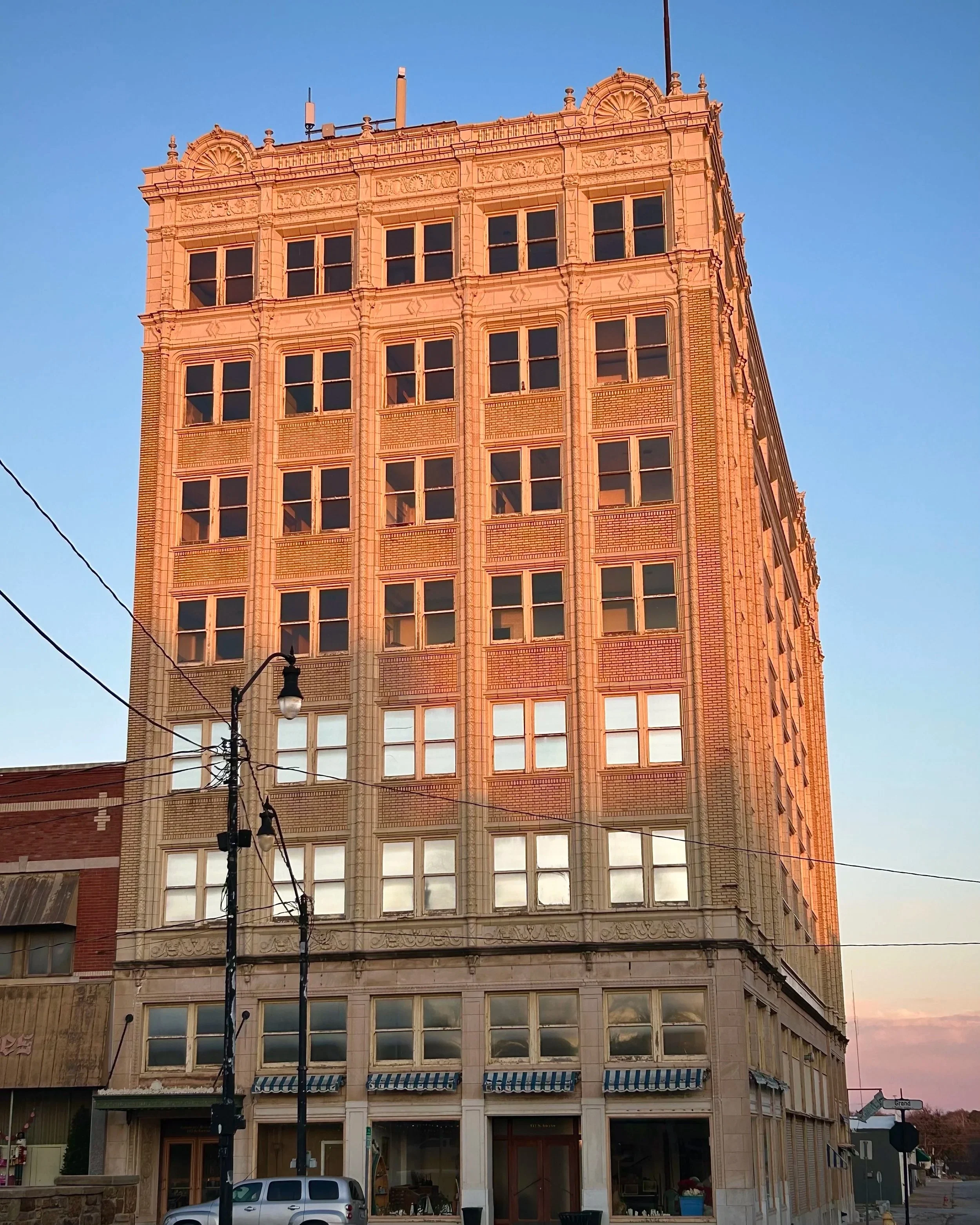
Photo submitted by Margaret Hess.
Lodge Laska
515 SW 6th Street-Oklahoma City
Also known at the Czech Hall of Oklahoma City and Bohemian Hall, this structure was built in 1924 and added to the National Register of Historic Places in 2015. The Lodge is a rare, surviving, intact early 20th century social hall that represents the early immigrants to Oklahoma City. It is a one-story, balloon frame building with a one-story historic addition on the rear elevation. The main room has a wood floor that served as meeting space and a dance hall. At one end of the main room is a raised stage.
Why It’s Endangered: Initially, the Lodge was included due to its proximity to development all around it. As you can see from the pictures, its structure is failing rapidly. Without intervention, it will be lost.
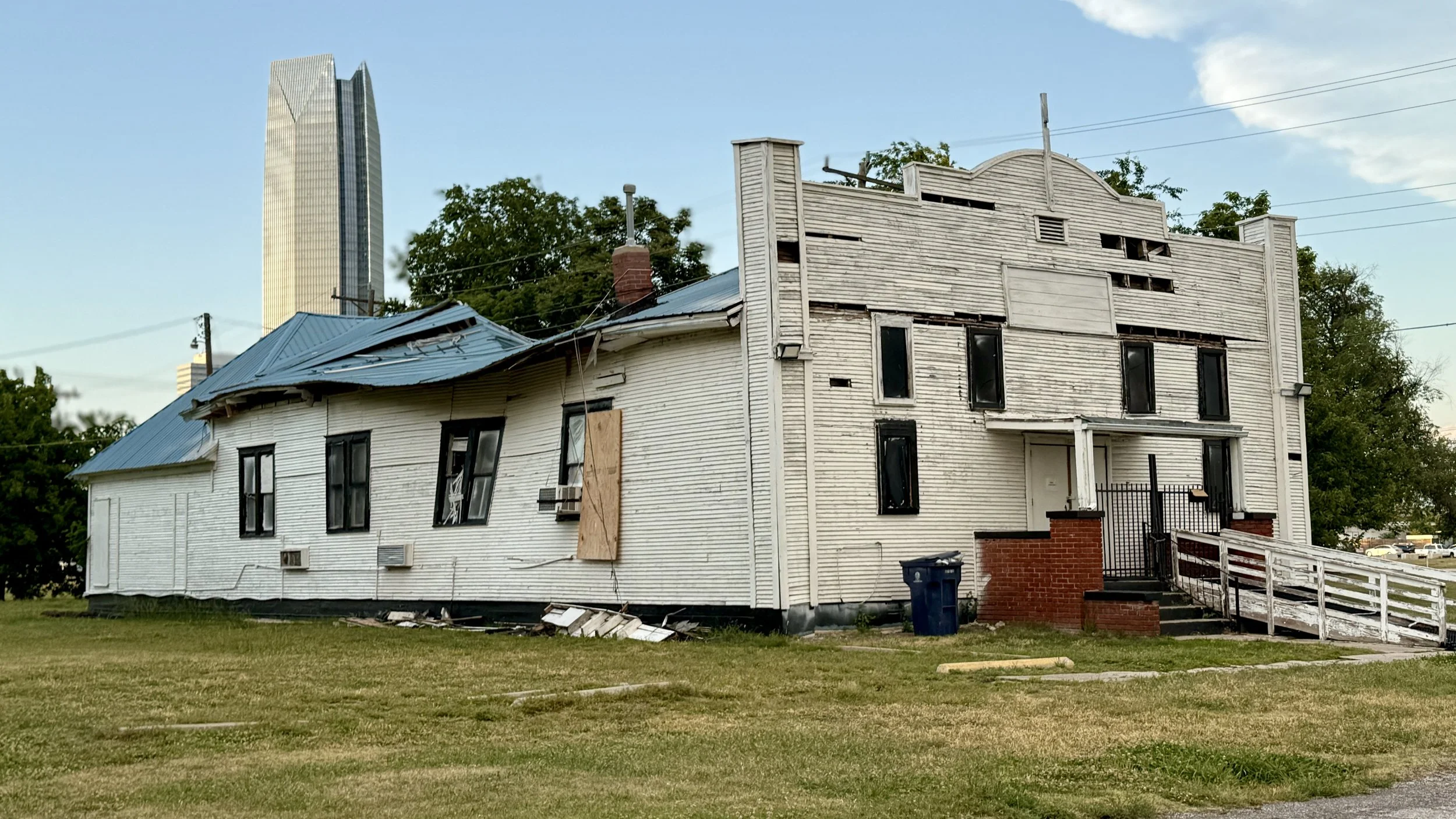
Photo by David Bierschank.
Covenant Presbyterian Church
10100 Ridgeview Drive-The Village-Oklahoma City
The Covenant Presbyterian Church campus was completed in 1972. The building and stained-glass elements were designed by a Harold Hite, a church member and architect. The building features a great mid-century design, including an intricate decorative guttering system. The building itself was designed to look like Noah’s Ark. It is located in the heart of The Village.
Why It’s Endangered: Unfortunately, after 70 years, the congregation of Covenant Presbyterian Church has dissolved. The property is currently for sale, and the congregation hopes another church will purchase and make its home in that location. However, that area also has a lot of new development very close by that makes it concerning. Additionally, church buildings can be seen as hard to redevelop if another congregation isn’t located.
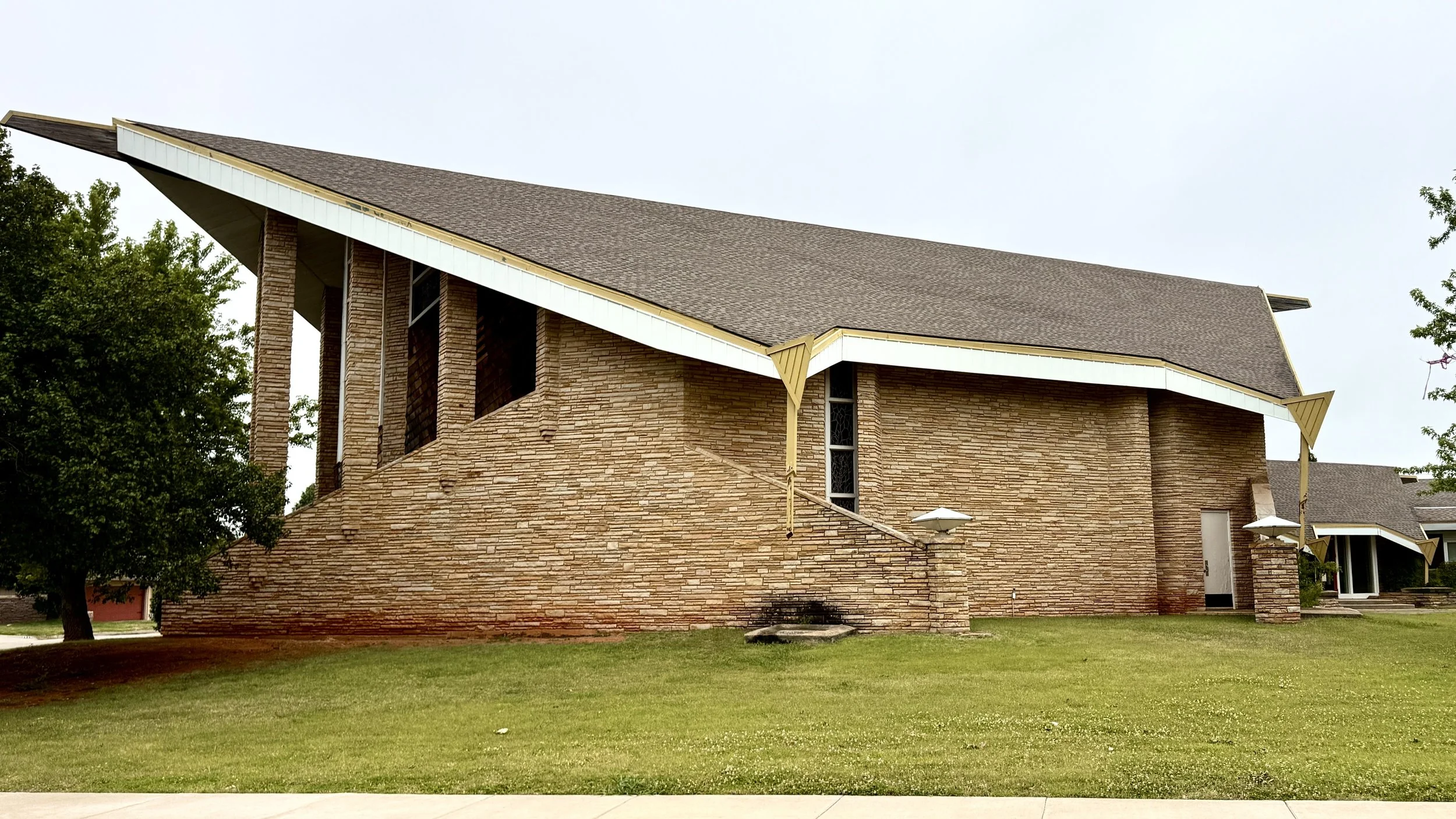
Photo by David Bierschank.
Bert McCarty Furniture Store
110 South 1st Street-Ponca City
The Bert McCarty Furniture Building was built in 1920 and is a contributing structure for the Downtown Ponca City Historic District on the National Register of Historic Places. It’s a two-story stucco-clad building with two storefronts. In 1909, Bert McCarty purchased a furniture business he had previously worked in, later adding undertaking as well. Around 1920, he took over this building and moved his businesses there. It is currently owned by a non-profit that has had to relocate due to issues with the building.
Why It’s Endangered: The Bert McCarty Furniture Building is rapidly deteriorating due to a leaking roof, failing rear façade, and the presence of asbestos. These conditions have forced the tenant to relocate, increasing the likelihood of vacancy and accelerated decline. If this business is lost, it will be a large missing piece in historic downtown Ponca City.
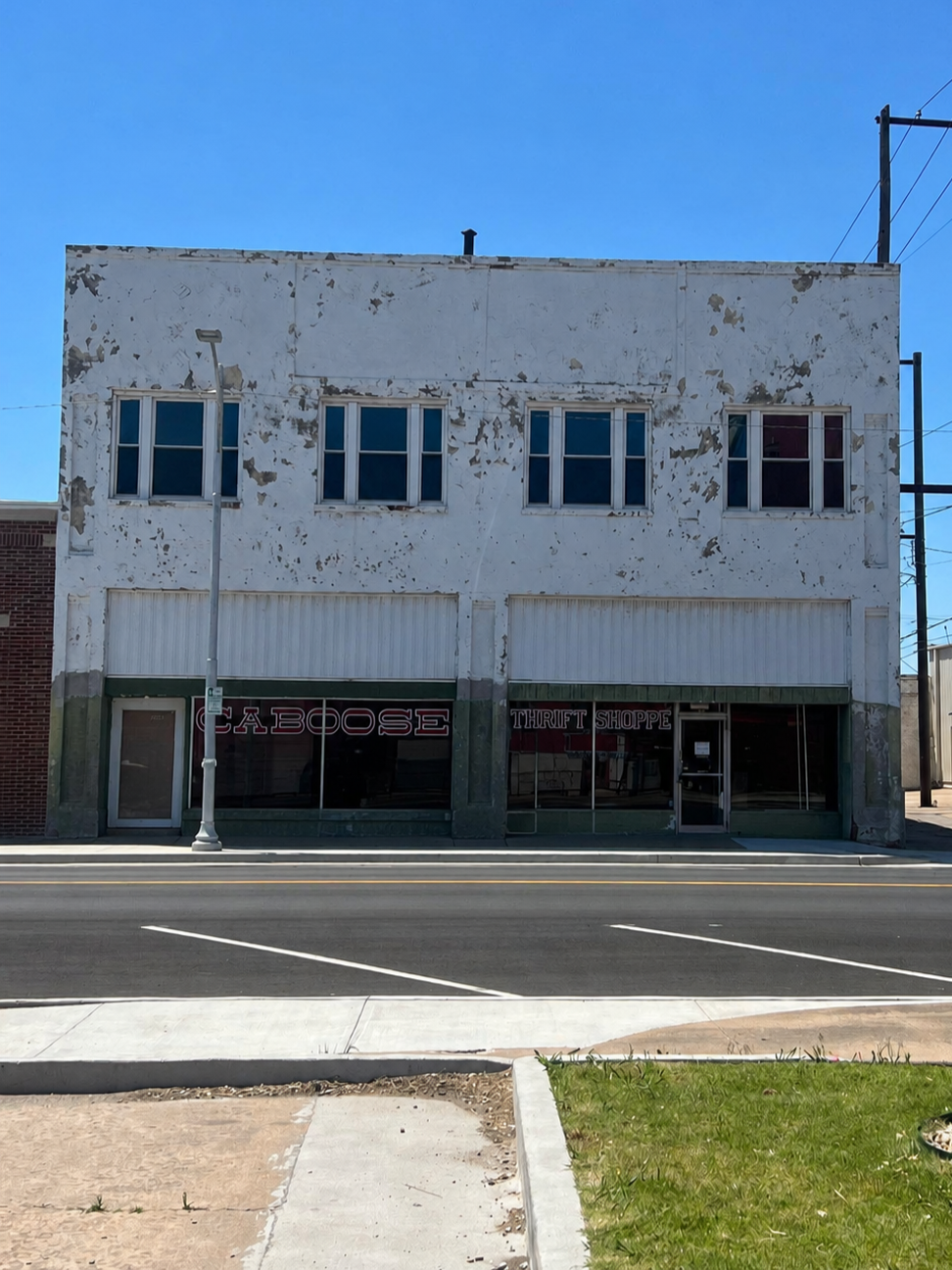
Photo submitted by Kacey Flannery
Ingalls Hotel
Ingalls
The Ingalls Hotel is believed to be the original building from the 1920s. The nomination to the State Register from 1980 describes it as “a 1920s building used as a hotel and Masonic lodge during oil boom days.” Seems to be the Masonic lodge did some renovation/alterations to replicate the original hotel for the reenactments the town once held, but there’s no information showing how much it has strayed from the original design. Today, Ingalls is described as a ghost town. A notorious gunfight between members of the Doolin/Dalton gang and law enforcement occurred near the hotel in 1893.
Why It’s Endangered: The Ingalls Hotel is endangered due to age, deferred maintenance and lack of preservation funding.
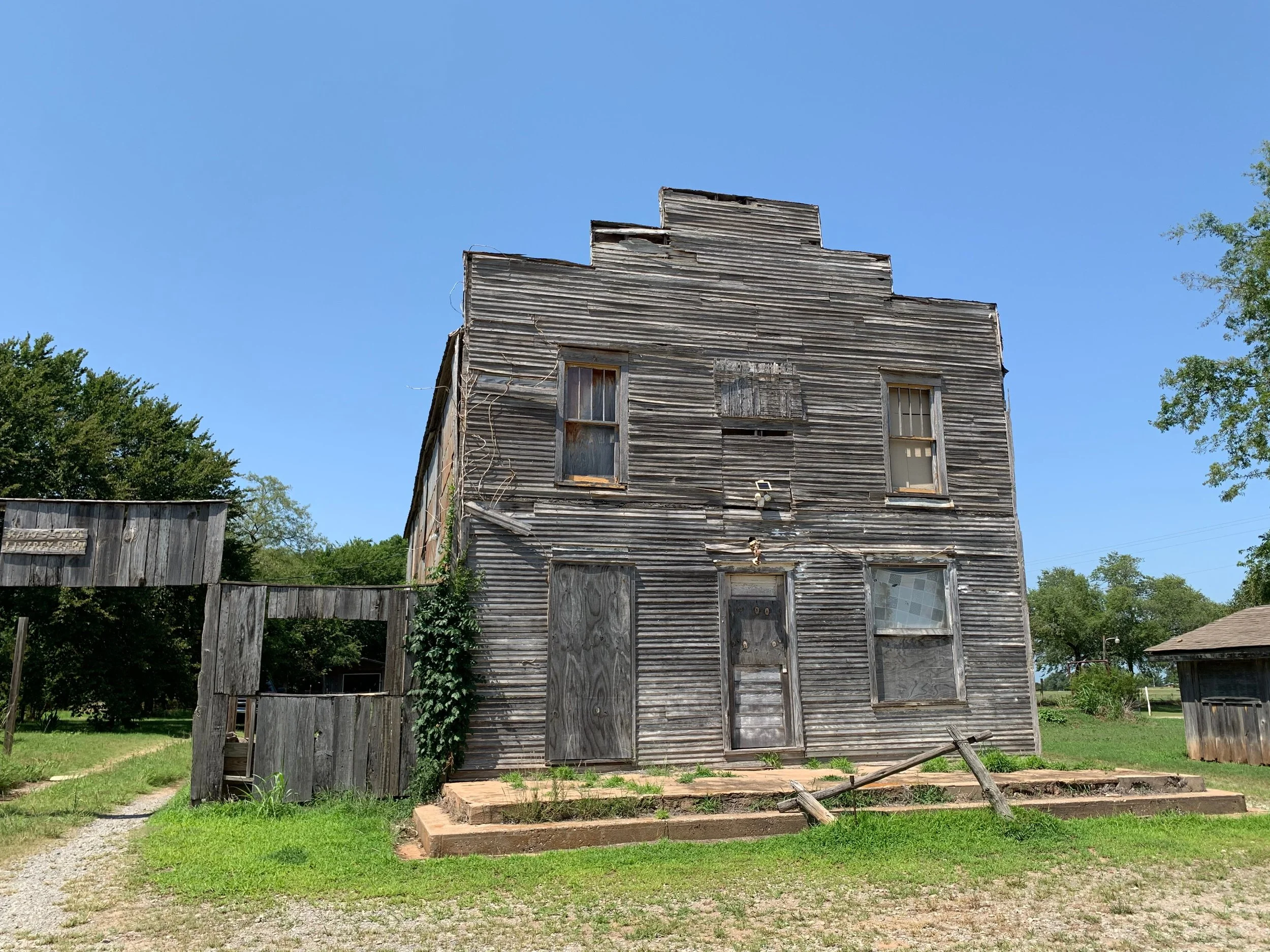
Photo by Shelley Bierschank
Original Pavement of Route 66
Ribbon Road-Miami
Canadian County-East of Fort Reno
Washita County-Southwest of Clinton
As Route 66 celebrates it’s 100th anniversary this year, there are some alignments with the original pavement that are endangered. The Ribbon Road, an early alignement of Route 66, stretches from Miami to Afton. That portion of the road was built in 1922, becoming part of Rt. 66 in 1926. It’s the only stretch of original 9 feet wide pavement on the entire route.
A portion of the route from Fort Reno to Calumet and a portion southwest of Clinton are also included due to the original pavement.
Why It’s Endangered: With the road reaching 100 or more years old, maintenance is needed like any other road. However, resources of the counties maintaining those portions don’t always facilitate true preservation of the original concrete. Additionally, more travel has brought requests to widen the road, which destroys the original pavement and curbing.
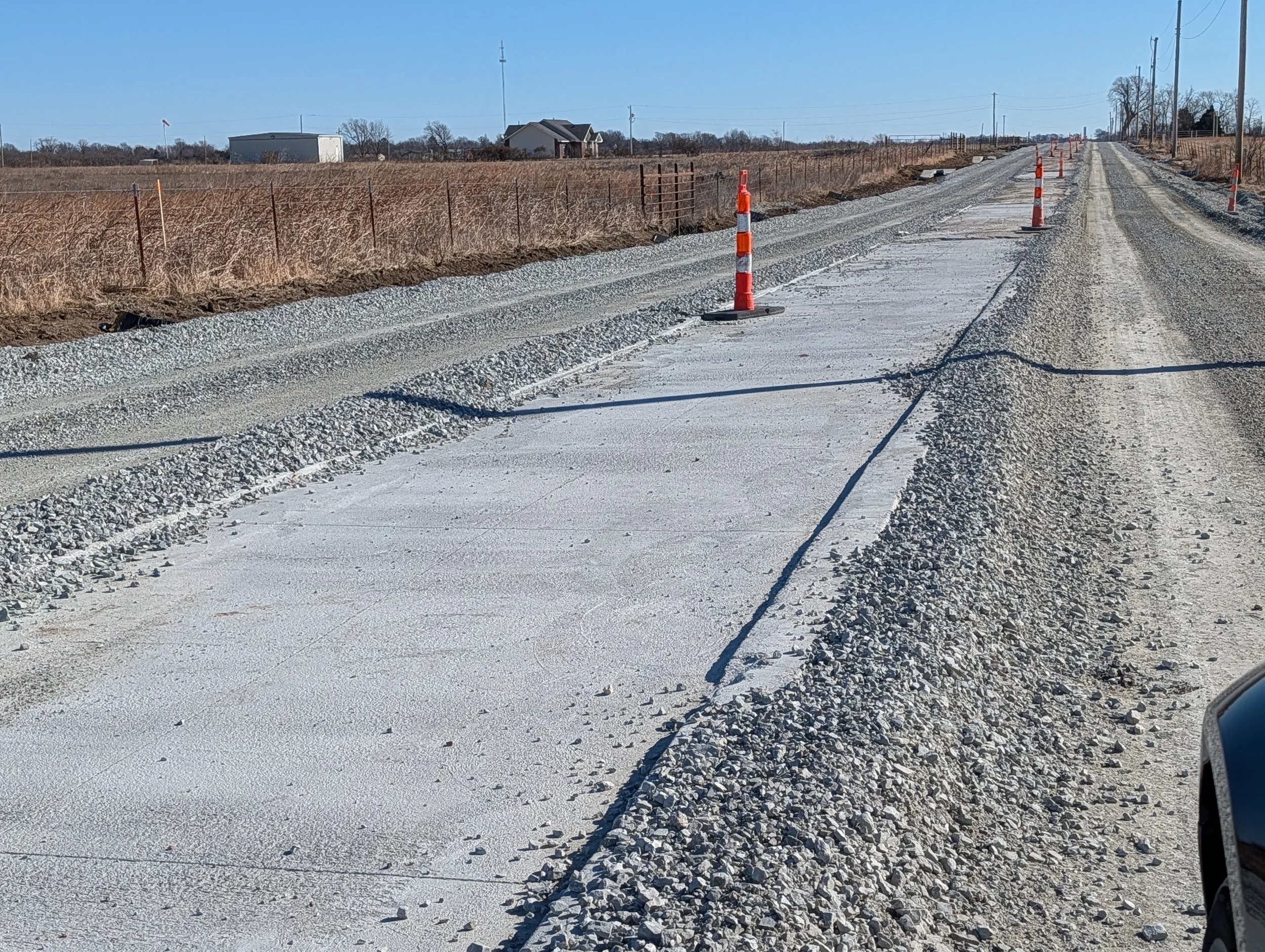
Photo by Rhys Martin
Historic Cemeteries
Bruner Cemetery-Seminole
Earl Cemetery-Mannsville
We received multiple submissions for historic cemeteries. Many of these cemeteries are no longer maintained by municipal entities and rely on local residents or family members to maintain. Some are being encroached by new development. Along with the two that are highlighted here, there are many more across the state that are deteriorating and in need of preservation and restoration.
Earl Cemetery was one of, if not the first, cemetery in the Johnston County area. The oldest marker preservationists have found is 1882, and they fear there are many lost graves. Recently, someone burned the cemetery and drove through the center of it, crushing many markers to rubble. There are pieces of the monuments strewn throughout the area, and many markers are moved from their original spot.
Bruner Cemetery is the final resting place of many Black Seminoles who arrived in Oklahoma from Florida on April 13, 1839, signing in at Ft. Gibson. The cemetery site has been divided into two sections, with one being maintained and the other not being maintained.
Why It’s Endangered: For historic cemeteries, they rely on family members, members of the local community or cemetery association to maintain them. As more people who know these cemeteries pass on, they are losing some of the care and attention necessary to keep them maintained and easy to access. Additionally, vandalism always presents a threat.
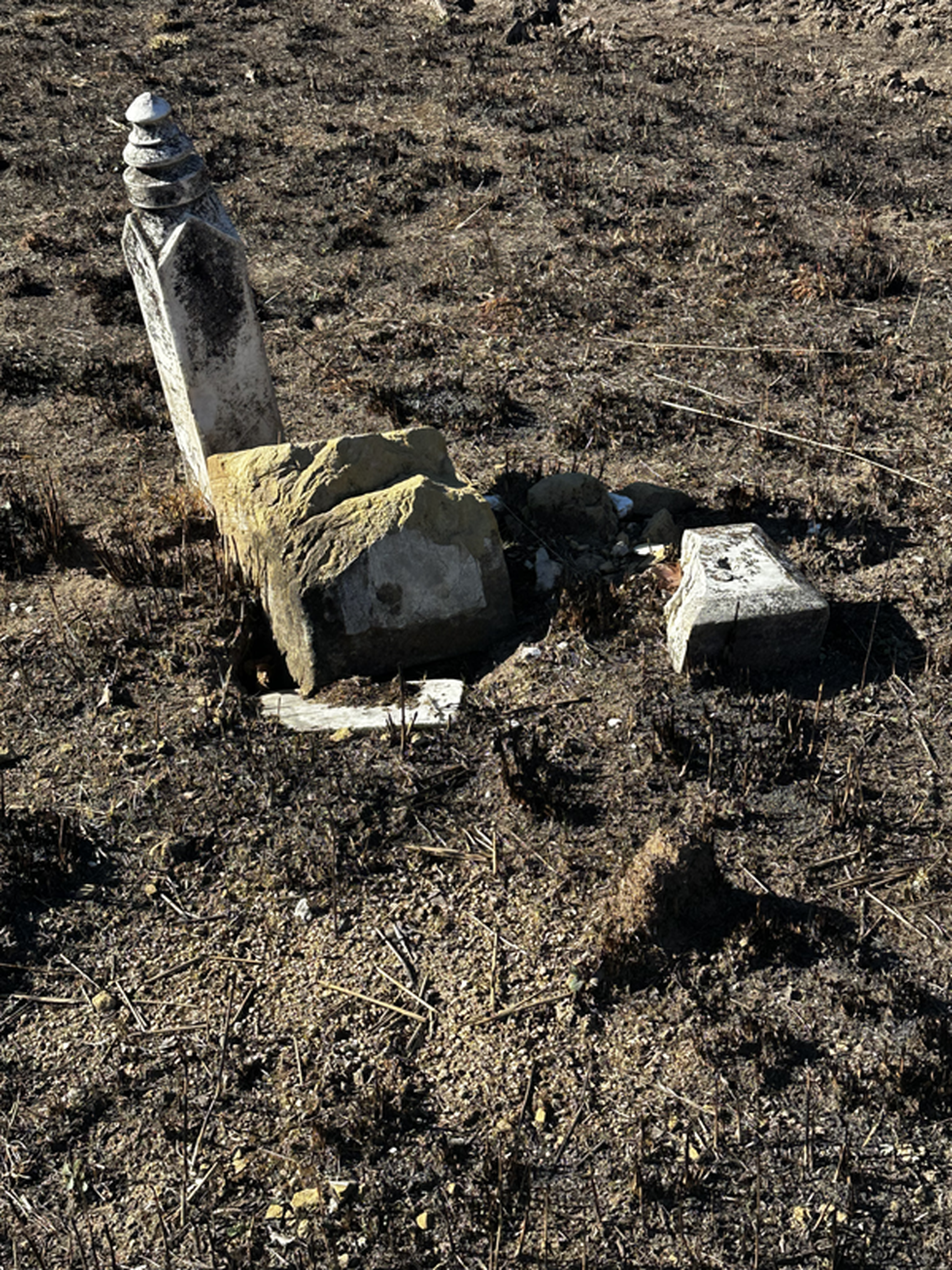
Photo submitted by Alyvia Turner
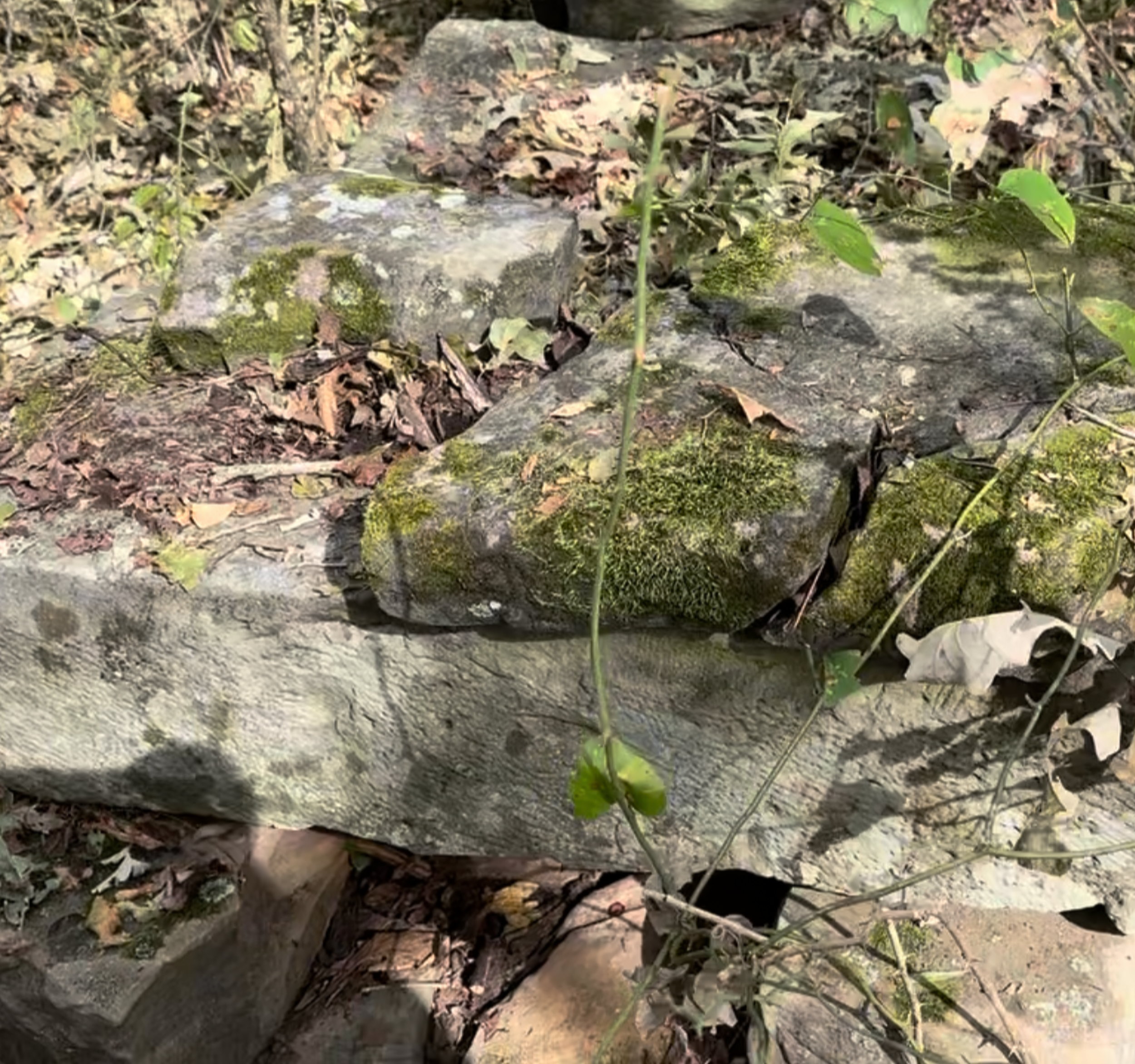
Photo submitted by Ann Gaines Ali
Established as one of Preservation Oklahoma’s first programs, Oklahoma’s Most Endangered Historic Places was patterned after a similar annual list produced by the National Trust for Historic Preservation. Ralph McCalmont, one of the founding board members of Preservation Oklahoma, had also served on the board of the National Trust and was keenly aware of the program’s impact. Realizing the need for Preservation Oklahoma to focus public attention on the state’s historic structures, the Board of Directors agreed to publish an annual list of “properties and sites which have special historic or architectural significance to our state, but which are in danger of being lost, due to neglect, poor maintenance, obsolescence or other causes.” The purpose of producing this listed was stated by John Mabrey, then the President of Preservation Oklahoma, when he said “if we bring the problems to light of a structure familiar to people, they are more likely to do something about it.”
For over thirty years, people have done “something about it.” While inclusion on the list does not guarantee protection or funding, it has proven to be a key component in mobilizing support for preserving historic sites by raising each structure’s awareness to a statewide level. The nomination process has evolved to reflect the fact that the public is aware of the need to preserve their local structures. Today, nominations are solicited annually from the public. The nominations are compiled, and the formal list is selected by a group of preservation experts, including historians, architects, and archaeologists.